Showing posts with label newar community. Show all posts
Wednesday, July 1, 2015
Sagan: Newari way to wish good luck

Sagan: Newari way to wish good luck

sagan newari ceremony
Khen Sagan

The Sagan( सगं in Nepal Bhasa)(Sagun in Nepali Bhasa) is a Newari ceremony. It is a highly respected and admired ceremony in Newar community of the Kathmandu Valley.
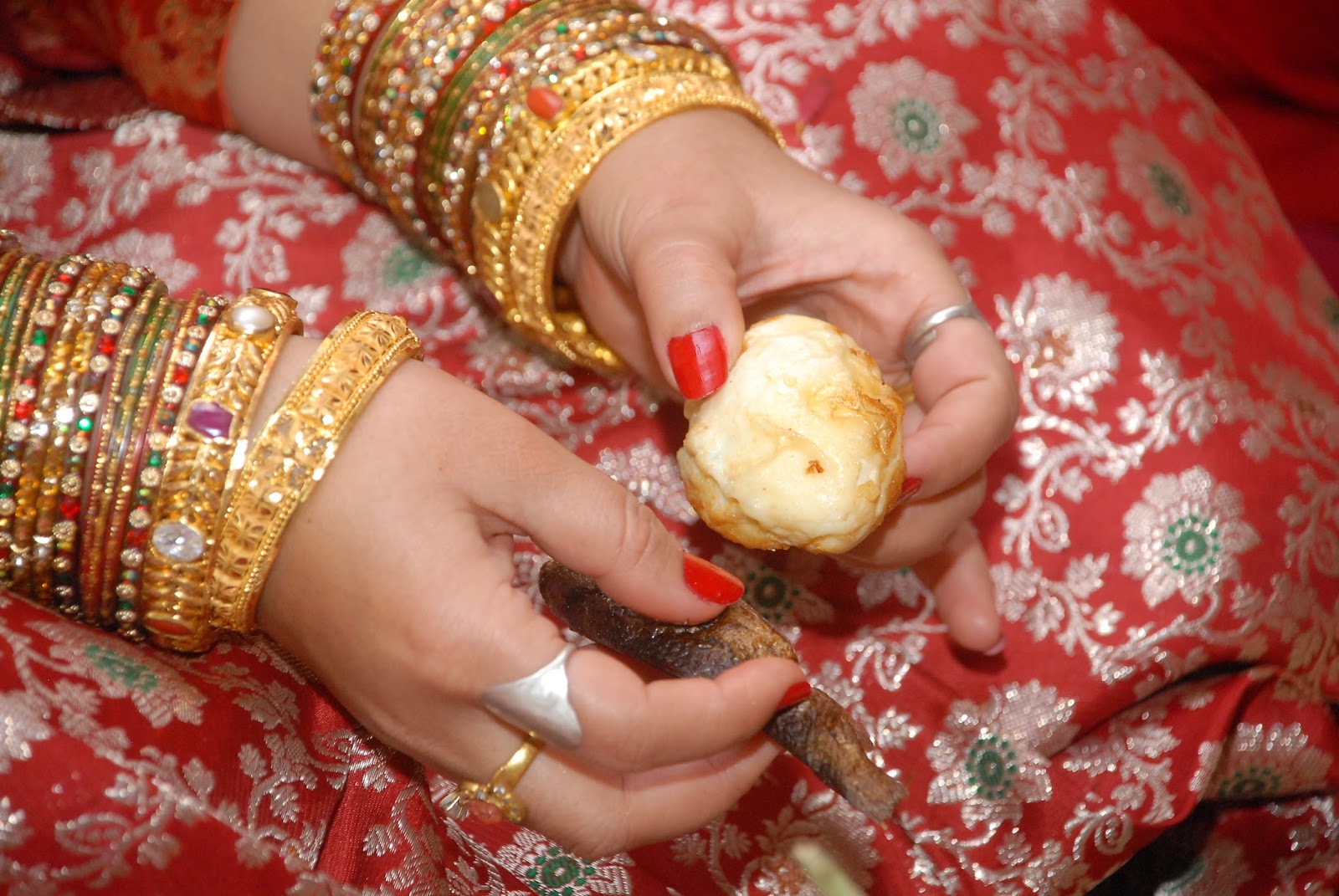
The Khen Sagan involves ritualized presentation of auspicious food to a person to wish good fortune /good luck and show respect. The food items served are boiled egg (khen), smoked fish(sa-nya), meat(hakhu chyoala), lentil cake(wo) and rice wine(aayla) which represent Tantric concepts.
The Sagan basically means good luck which represents the symbol for best wishes and prosperity to the person during special occasions such as life-cycle events like baby shower, birthdays, weddings and old-age rites. 
The Sagan is also presented at the Mha Puja ceremony on Nhu da(New Year's Day of Nepal Era ). Mha Puja is performed by praying Mandala and offering sagan for purification and ,strengthening of the self.
People who are going to travel are given the Sagan before departing on a long journey and on return from a trip.
The Sagan is given to the people who have achieved a special feat like promotion at work, pass in exam etc or survived a life-threatening accident.
The Sagan is a practice that is a part of a very old and respected culture and still involves the humble idea of praying for an individual’s safety and good luck.

Sagan Ceremony:

As per the general practice, the person receiving the Sagan sits cross-legged on the floor, and a Sukunda(oil lamp with Lord Ganesh on it) is placed on a large leaf in front and to the right. Lord Ganesh, regarded as the protector deity who removes obstructions from people’s lives,which is the central character of the ritual.
The eldest woman in the house brings a tray containing puja of swan(flowers), jaki(rice) and hyaungu sinha(red paste) .First of all ,she worships Lord Ganesh on the Sukunda it on . She then puts a dab of hyangu sinha on the forehead of the honoree and others in the room. The participants also take a dhau sinha (dab of yogurt from a bowl) and put it on the temple (to right for male and to left for female).
The main ritual is performed next. The she presents a boiled then fried egg and smoked fish on the right hand and ayela on Sali(wine bowl) on the left hand  which the participants accept with crossing both hands. A woman helper follows pouring wine from anti(a jar) into sali(little wine bowls). After everyone has been served, she walks down the line again pouring wine three times into each sali. She serves wine a third time after which the participants can set down the sali. The blessings from elders in the form of sinha(tika in nepali), is believed to protect the bearer from evil thoughts and doings.  
The procedure and materials may vary as per family tradition and geography. Laddu (sweet balls) may be presented in place of boiled eggs and banana may be presented in place of fish especially for vegetarians.  Seating may be arranged on the floor or on chairs.
 The methods and few practices might differ within Newari culture as well but the core of the practice is the same. 

Sagan and the Tantric Concept 

The five food items served in sagan in Newari culture represents Tantric concept called Panchamakara. In the Tantric tradition, these five concepts and various ritualia associated with them are tied to the religious practice to attain salvation.Panchamakara is also known as the Five Ms. It is a Tantric term referring to the five substances used in a Tantric practice.
·         madya (alchohol)
·         māṃsa (meat)
·         matsya (fish)
·         mudrā (parched grain)
·         maithuna (sexual intercourse)
Sagan contains the food items mentioned as part of the panchamakara: egg as maithuna, fish as matsya, ayela as madya,choyla meat as mamsa and wo as  mudra.


Other myth about the sagan is as the items in sagan represents light, earth, water, air and sky. According to this, light is symbolized by wine, earth by meat, water by fish, air by lentil cale and sky by egg. Beings are warm which is provided by light, and when a being dies, the body becomes the earth. Similarly, the body contains water, breath and empty space which are the sea, air and sky. To balance the harmony of these five elements of body sagan is presented.
Read more
Tuesday, June 23, 2015
Chatanmari : A must try newari delicacy

Chatanmari : A must try newari delicacy

chatamari newari food
Chatanmari
Newar community of Nepal is identify as the culturally rich community. The Newari food is considered as one of the most popular food in Nepal along with being delicious.  Chatanmari is one of the most popular and delicious Newari food. Newari cuisine consists of more than 200 foods in it of which chatanmari are one of them.

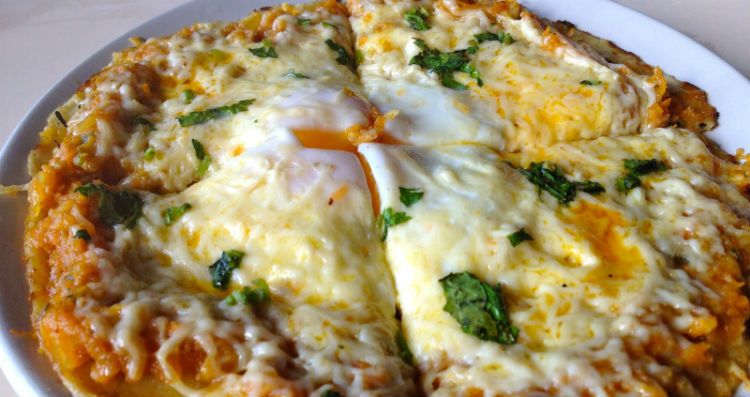
Chatānmari (Nepal Bhasa: चतांमरि)  is a kind of very thin pancake/crepe usually made from rice flour. It is regarded as a delicacy. The most rejoiced food in Nepal, 

chatanmari
Chatanmari is topped with variety of topping specially miced red meat and egg or vegetables and seasoned with vegetables. Chatanmari is eaten as a snack or an appetizer during newari festivals and other special occasions.

Many restaurants and enteries in Kathamandu are serving chatanmari as main item or appetizer on their menu. Also sometimes referred as Nepali pizza.


Social and ritual significance:

Chatamari are traditionally made for a puja. When you make it for puja, it is just plain rice crepe with no toppings.
It is used specially during 'the guthi' and ‘digu dya puja’ of newars and other newari festivals such as BalKumari Yatra, Panha Chahre, Ghya chaku sanhlu etc.  


How to cook Chatanmari?

Chatanmari
Ingredients
Rice flour batter:
  • 1 cup rice flour
  • 1/6 teaspoon salt
Topping: 150 gram ground / minced buff meat
  • ¼ cup chopped onion
  • ¼ cup green peas
  • 1 tablespoon diced tomato
  • 1 teaspoon diced hot green pepper
  • 1 teaspoon garlic paste
  • ½ teaspoon ginger paste
  • 1 tablespoon oil
  • Salt to taste
Cooking Utensils
  • 1 damp cloth
  • 1 non-stick flat pan (made of iron) with lid
Alternative Topping 1 Eggs
Alternative Topping 2 minced meat of chicken,mutton etc
Alternative Topping 3 vegetables
Procedure
Rice Flour Batter The Rice Flour is mixed with Water.
Topping Everything is mixed well.

Cooking The non-stick flat pan should be heated to medium. Then the batter is poured on the hot pan and spread as thin as possible with the ladle used to pour it. The topping is put on the batter and covered with a lid until the topping is cooked.

Read more
Tuesday, June 16, 2015
Newari Traditional Jewelries

Newari Traditional Jewelries : Tisha (तिसा ) 

One of practices of Newar community is of wearing Newari traditional jewelries. The Newari traditional jewelries are worn by the Newari women have specific names  and purposes. Newars celebrate numerous events and feasts associated with important milestones in their lives like the rice feeding ceremony, weddings and so on. The jewelry of the women are associated with these specific events.
Newari brides with newari traditional jewelries

Tayo:

Tayo -newari traditional jwelery
Tayo
Tayo is the largest ethnic jewelry piece. It is a gold amulet necklace with the multi-headed serpent Sesh Naga.
Tato has symbolic meaning s and religious values.  it is believed that the pointed pendent part of the necklace symbolizes the Kathmandu Valley, while the facets of the pendent for the directions of the Valley, and a center jewel under the hood of the snake-heads is for the Swayambhu Stupa of the Kathmandu valley.
Traditionally it should be made of high carat gold. The main element of the tayo is a hollow lozenge-shaped pendant connected to the necklace with two mirror-image comma shapes, often set with turquoise or coral.


Lunswan:

lunswan and nyapushikha
Lunswan is a circular disk type ornament made of gold worn at centre of head. It has a quite big image of Lord Ganesh on coral with superb designs all over and distinctive peacocks at the top
Lunswan is usually worn by bride on the wedding. 


Tikma:

Tikma is the necklace. It consists of a number of repousse-worked metal plaques sewn on fabric. The fabric is usually red, either cotton or velvet. The plaques are made of gold or gold-plated copper. The most common motifs that the plaques are embellished with are flowers or peacocks.This necklace is decorated by a row of teardrop-shaped glass beads. They are sewn to the fabric on the periphery. Tikma is mostly used in the various ceremonies, in the wedding ceremonies and in traditional dances. 

Ghau:
ghau newari traditional jewelry
Ghau

Ghau is originally Tibetan traditional jewelry.But it has been adopted in newari culture through newars from hilly region.  It is amulet box pendent with precious stones. It is a symbolic jewelry piece related with the Mahayan Buddhism. The stones at the corners and at the center signify the five Pancha- Buddhas of Swayambhu Stupa.


Kilip:

Kilip is a finely worked out gold head ornament. The word probably came from the english word 'clip'.It is in oval shape with a cluster of flowers motif and usually a peacock or moon-shape on the top. It is used as a hair clip on the back of the head. The back of the Kilip is made of silver with a lock on it.

Nyapu shikha:
nyapu shikha newari attire
Bride wearing nyapu shikha

Nyapu shikha is named for the five gold chain.It is another elaborate piece worn on the head. It has many small strings attached to a point and is worn on the side.

Patachin shikha:

 One of the commonly worn ornament is "Patachin shikha" or a simple gold necklace.

Company Shikha:

 "Company shika" is a necklace made of coins.

Bhimpuma:

 "Bhimpuma"is necklace made of coral.

Makansi:

Makansi - Newari traditional Jewelry
Makansi
This is earring made of silver or gold specially worn with Haku patasi. The earrings are u-shaped and are called "Makansi".

Chura:

 The hand are adorned with gold rings and bangles.

Kalli:

 Kalli is worn around the ankles.It id usually made of silver and u-shaped.


Tuki:

Tuki is double studs jwelry inserted in the helix of ear. These are worn by elder women after their ritual procession called Janku. Most of tuki are plain in design but some are in floral design.


Read more
Yenya: Kathmandu's Biggest Religious Festival

Yenya: Kathmandu's Biggest Religious Festival

Yenyā (Nepal Bhasa: येँयाः) known as Indrajatra( In Nepali language) is the biggest religious street festival in KathmanduNepal. Yen means Kathmandu and Ya means festival in Newari.
This is eight day long festival. The celebration begins every year from 12th day of the bright fortnight to the 4th day of the dark fortnight of Yanlā (ञला), the eleventh month in the lunar Nepal Era calendar.

indrajatra and kumarijatra
Yanla(Kumari jatra and Indra jatra)

The Fesistival consist of two events :
  • Indra jatra : Celebration in honor of the deity Indra(God of Rain and the king of heave) is marked by masked dances of deities and demons, displays of sacred images.Indra Jatra was initiated during the Lichhavi Period (300 BC-1200 AD) by king Gunakamdev.
  • Kumari jatra : The chariot procession of Living Goddess Kumari. In 1756 AD, the last Malla king of Kathmandu, Jaya Prakash Malla, started the Kumari Jatra, beginning on the third day of Indra Jatra, as a tribute to the goddess Taleju Bhawani.

Indrajatra:

Indrajatra is the festival to honour the Indra and Dagini(Mother of Indra) for the coming harvests.This is celbrated by displaying lord indra's statue at maru tole,  faces of dieties and dances of dieties and demons. 

Story Behind indra jatra

Indra, the lord of the heavens, was told by doctors that a Parijat flower was needed for the treatment of his dying mother, Dagini. Indra came to earth in search of the flower and found it in a tree in Kathmandu. Locals spied on the god in the act of plucking the flower and promptly seized him as a thief. Indra was tied to a pole and put on display at various places in the city for eight consecutive days, beginning with the Baman Duwadasi, according to the religious calendar, which usually falls in September-October. Later, when Dagini herself came to know of her son’s arrest, she too came down and pleaded for her son’s release. He was imprisoned until Dagini revealed his identity and his captors gladly released him.In return for his release Dagini promised to spread dew over the crops for the coming months and to take back with her to heaven all those who had died in the past year.
The Indra Jatra festival thus honors the recently deceased and pays homage to Indra and Dagini for the coming harvests.

Kumari Jatra:

Kumari Jatra is chariot festival of Kumari the Living goddess also known as "Kumari Salegu".This procession forming the climax of the Indra Jatra festival. Kumari  travels in a special chariot around old cities of kathmandu. 

Story behind kumari jatra:

There is a different myth behind the Kumari Jatra, which Jaya Prakash Malla initiated centuries after the Indra Jatra. It is said that the goddess Taleju Bhawani was the king’s political and social advisor and would give important tips to the king on good governance. However, during one of their meetings, the king, overwhelmed by desire, attempted to rape the goddess inside the Taleju Bhawani temple, prompting the goddess to disappear and vow never to appear before the king again. Worried by the goddess’ proclamation, the king begged her to reconsider her decision. Taking sympathy on the poor king, Taleju pledged to reside within the Kumari, a virgin girl from the city. Jaya Prakash Malla identified the right Kumari and built a palace for her in the Hanumandhoka area. In honour of Taleju Bhawani and the Kumari, he began a separate procession called the Kumari Jatra, which happened to fall on the third day of Indra Jatra.

Procession of Festival:

The festival begins with the carnival-like erection of the Yosin, called Yosin Thanegu (योसिं थनेगु).
A ceremonial pole about thirty six feet long is erected at first day which chosen with great care from the Nala forest in Kavre district east of Kathmandu.

Next event in evening of first day is Upāku Wanegu (उपाकु वनेगु). It is the really when  participants visit shrines holding lighted incense to honor deceased family members.

Mainly the staue of god indra with his outstretched hands bound with rope are exhibited on a tall platform at Maru near Durbar Square and at Indra Chok, Kathmandu.

Jatra is accompanied by the rare display of the deity like Akash Bhairab, Swet Bairab. Bhairab is the terrifying aspect of Lord Shiva.

Kumari jatra is chariot pulled procession of godess kumari start from 3rd day of Indra jatra.

Before procession start goat sacrificed to each wheel guarantee her safety, and elephant-headed Ganesh and Bhairab, the god of strength and action, escort her in the form of two young boys. At the Royal Palace the Living Goddess receives the homage of the king, himself a descendant of Vishnu.The chariots move off and the Kumari is greeted from the balcony of the old palace by the president (by the king in past).
The chariot is pulled for 3 days starting from 3rd day of Indrajatra:
1st day : This day is called kwoneya:.On this day,the chariots are pulled through the southern part of town.
2nd day: The day is called thaneya: On this day,the chariots are pulled  through northern part of town.
3rd day: The day is called nanichaya:.On this day, the chariots central section to Kumari Ghar. This day the women's team pulled the kumari chariot.

When Kumari greets the image of Bhairab on the way chariot procession and then, with loud musical accompaniment, homemade rice beer(thwo) starts to pour from Bhairab’s mouth! .Its called 
Thwo hyakegu(Special Part of Kumari jatra). Getting a sip of this beer is guaranteed to bring good fortune, but one lucky individual will also get the small fish that has been put into the beer – this brings especially good luck.

During Indra Jatra, there are a variety of performances including the dances of Sawa Bhakku Bhairav from Halchowk, Majipa Lakhey from Majipat, Devi Nach and Yeravat hathi (Pulukisi) from Naradevi, Mahakali and Kathi Maka Nach from Bhaktapur. All the dances take place around Hanuman Dhoka area. The Dasavatar or the ten incarnations of Lord Vishnu is also staged on the open stages of the city called dabu every night. Indra’s elephant lumbers along a torchlight procession.


The yasin is pulled down signaling the end of Indra Jatra festival. It is taken to the confluence of Bagmati and Bishnumati in Teku to be put to rest.
Read more
Wednesday, June 10, 2015
Gathamuga : Chase away demon

Gathamuga : Chase away demons

Ghantakarna
Ghantakarna
Gathamuga is the unique festival celebrated only by newari community to chase away demons from home in symbolic manner. Gathamanga is celebrated in Kathmandu Valley in July which signals the end of the rice planting season and marks the beginning of the autumn season. The festival represents a ritual detoxification of the city or is observed as the day of eliminating the evil “Ghantakarna”, giant demon.


Read more
Monday, June 8, 2015
Haku Patasi : The Traditional dress for newari women

Haku Patasi : The Traditional dress for newari women


Haku means "Black" and Patasi means "Saree" in Newari language.

Haku Patasi, the black saree is the traditonal dress for women in newari community.
It is very different than regular sarees which are a part of most Nepali women’s wardrobes.
It is usually heavier, and always black saree with red boarder and yellow lining in between.
It is made of hand woven fabric of pure cotton.


How to wear Haku Patasi ? 


It is worn from the waist to the calves and does not cover ankles as generally other saris do. Newar ladies and Newar girls living in Kathmandu valley and its vicinity wrap Haku Patasi around their
waist and tie Patuka like a belt. Patuka usually called "Jani" in Newari language is a white
 long piece of cloth which is wrapped around the waist. Usually patuka is 12 hands (about 18 feet) long.

A full sleeved blouse tied at four different corners usually called "Misha lan" in Newari language (chaubandi cholo in Nepali) is worn as top above the Patasi. Above it, a shawl or "Ga" is wrapped around.

Changes in dressup and modern newar people:


Changes are always come in first place with changing time.
Nowadays newari girls and women are wearing mostly in ocassions like festivals, realy , cultural programs and so on.


Haku Patasi was specially worn by farmer women in daily life and special occasions by others also in past. But now most of all type of newari girls and women are liking to wear it occasionally.


But some of the fashion designers use newari traditional design with new type of atires and community are accepting it also.We should encourage these people and there work but need to have preserve our originality also.

Read more
Thursday, June 4, 2015
Yomari the special newari delicacy

Yomari


A yomari is a special Newari delicacy. It is a confection of rice-flour (from the new harvest) dough shaped like fig and filled with brown cane sugar(chaku) and sesame seeds, which is then steamed. 
To prepare yourselve please click here.

Yomari is the chief item on the menu during the post-harvest celebration of Yomari Punhi. On this full moon day,people of the Kathmandu Valley worship Annapurna, the goddess of grains, for rice harvest.

Read more
Newar Community

Newar Community

kumari jatra 

Newar community is one of dominant ethnic groups of Nepal. Newar is the indigenous group of Kathmandu valley that used to make almost the entire population of the valley before the Shah invasion in 1968 BS.Before the invasion of the valley, the three cities of Kathmandu, Patan and Bhaktapur were autonomous Newar kingdoms. Newars are found scattered in the various parts of Nepal even though they were originally from the Kathmandu Valley.

The Newars were primarily farmers and traders as the Kathmandu valley had fertile land suitable for rice cultivation and also trade between India and Tibet. During the Malla regime, the economic condition was stable and strong that gave the people to develop their skills in art, architecture and culture which is why these three cities are rich in cultural and architectural heritage.

Read more
Ehee:Unique Newari Tradition of marrying with imortal

Ehee : Unique Newari Tradition of marrying with immortal


ehee newari ceremony
Ehee

Ehee (Bel bibaha in Nepali) is a unique Newari culture and tradition. Young Newar girls who haven’t turned 13 take part in the ceremony when they are at an odd age of 5, 7 or 9 years before their first menstruation. In Newar community, girls are married three times in their lives. This is the first marriage of her life.

Read more
Tuesday, June 2, 2015
Newari Traditional Ceremony During Lifetime

Newari Traditional Ceremony During Lifetime

Newar people celebrates different ceremonies from birth till death. Some of the main events and ceremonies that newar people celebrates in there life time are as follows:
Barha Teyegu

Machabu Byankegu(Nwaran in Nepali)

This ceremony is performed to give a birth name to a child according to his/her lunar horoscope
and to purify the mother and child.
This is performed between four to eleven days after birth.

Macha Janku(Pasni in Nepali)

This ceremony is performed to feed rice first time at the age of six or eight months for
 boys and at the age of five or seven months for girls.

Ehee(Bel Bibaha in Nepali)


This ceremony is performed for a female child to marriage with betel nuts
( which represents Lord Vishnu) between the ages of five to nine.


Bahra Tayegu (Gufa rakhne in Nepali): 


This ceremony is performed for a female child to marriage with sun.She is kept in a room for 12 days hidden from the sun.
At 12th day they will marry with Sun.

Kayta Puja(Bartaband in Nepali)

As a male child approaches puberty, the Kayta Puja, a rite of initiation, is performed.
Shakyas and Bajracharyas perform Bare Chhuyegu which is initiation into the monkhood.
The boy disrobes and goes back to being a layman after four days.

Marriage 


Janku 


This is an old-age ceremony which is conducted when a person reaches the age of 77 years,
seven months and seven days.
Further Janku ceremonies are performed at similar auspicious milestones.
Read more